

You Should Know What Is Happening on the Floor Right Now.
When production data lives in spreadsheets, whiteboards, and supervisor memories, management decisions are based on yesterday's information at best. Capacity planning becomes guesswork. Delivery promises become risky.
What Poor Production Visibility Costs.
Decisions Based on Stale Data
By the time production reports reach management, the situation has changed. Reactive firefighting replaces proactive planning.
Capacity Planning by Intuition
Without real-time visibility into work orders and machine utilisation, capacity planning relies on experience rather than data. Bottlenecks appear unexpectedly.
Delivery Promises Without Confidence
Sales makes commitments without knowing true production status. Operations scrambles to meet promises that were never realistic.
Manual Tracking That Falls Behind
Paper-based or spreadsheet tracking cannot keep pace with actual production. The system and reality diverge within hours.
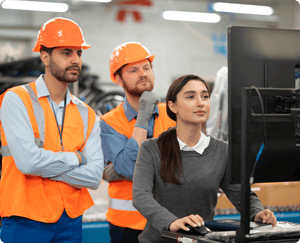
Production Visibility in Real Time.
- Work order status visible to anyone who needs it, updated in real time.
- Capacity utilisation tracked against plan, with variance alerts.
- Production throughput dashboards accessible to operations and leadership.
- Delivery dates based on actual production data, not estimates.
- Exception reporting that highlights problems before they cascade.
- Data captured at the source, not re-entered hours later.
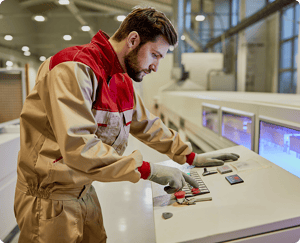
Solutions That Deliver Production Visibility.
We implement production management systems that capture data where work happens and make it visible to everyone who needs it.
Production Systems Require Shop Floor Buy-In.
The best production system fails if the floor does not use it. We design implementations with user adoption in mind—intuitive interfaces, minimal data entry burden, and clear value for the people doing the work.
Change management is not an afterthought. It is built into our approach from day one.
Frequently Asked Questions.
Does this require hardware on the shop floor?
Depending on your environment, you may need tablets, barcode scanners, or kiosks for data capture. We assess requirements during discovery and recommend appropriate hardware.
How do we get operators to use the system?
User adoption starts with design. We involve operators in requirements gathering, keep data entry simple, and demonstrate clear benefits. Training and ongoing support reinforce adoption.
Can this integrate with our existing machines?
Integration possibilities depend on your equipment. Modern machines often support data connectivity. Older equipment may require manual data entry or additional hardware.
How quickly will we see production data?
Once implemented, production data is typically available within minutes of capture. Real-time dashboards update automatically as transactions occur.
What about quality tracking?
Quality management can be integrated with production tracking. We configure inspection points, defect tracking, and quality reporting based on your requirements.
How long does implementation take?
A production module implementation typically runs 3-5 months, depending on complexity. This includes process design, configuration, testing, training, and rollout.
Ready to See Your Production Clearly?
A Fit Call will help us understand your production environment, current tracking methods, and visibility goals. We can then recommend the right approach.